Most reads
- How and what are the Exportation from Iran to Oman 0 to 100?
- Top Canadian Exports Products in Global Demand in 2026
- Import screen from China
- Import from Iran
- Exporting Iranian Products to Kuwait
- What is Certificate of origin? (COO)
- Exporting Wheat from Canada
- Exporting dates from Iran
- Export Iranian products to Bahrain
- Import Pipes from China
- Export from Iran
- How to Export Iranian Iron Ore A Guide to Suppliers, Logistics, and Trade Compliance
- Canadian automotive exports Market and how to Export
- Pricing of Your Exporting Product in 2025
- 9 strategies find International buyers for my products
- Export walnut from Iran
- What supplier needs to know before exporting agricultural products in 2025?
- Why is exporting oil and fuel from Canada leading the global market?
- Incoterms 2020 and its importance for Exporters & Importers
- Lumber suppliers list 2025 best prices guide
FOB vs. CIF vs. EXW? How to Choose the Right Incoterms 2020 for Your Business
Knowing Incoterms 2020 is momentous of each contract between buyers and sellers (in both domestic and international business). So, I will explain and share my experience with you to help you understand every aspect of incoterms.
In general incoterms will show you what your responsibility is over different area of selling or buying (mostly for international trades). It will elaborate role of each business sides. Explain the risks, duties and Costs. Therefore, they don’t face any conflict or misunderstanding during trading.
For the beginning you have to know what incoterms is and who created it:
History and Reasons of INCOTERMS 2020
Before WW2, businesses used many clause in their contracts and they had faced tones of challenges too. So, international chamber of commerce created sets of rules to standardized regulations between traders.
And from 1936 they have cleared many rules by some abbreviation like FOB, C&F and etc. so, buyer and sellers didn’t use long contact clauses to cover their responsibilities.
Then in 1953 ICC stablished another version and it lasted till 1967 which covered Air shipments too. After that, in 1980 after entering standard containers they resided to revise incoterms. Since then, each decades, they have checked global market and problems related to trade regulations and improve till now. And now you have INCOTERMS 2020 the Clearest and most defined incoterms ever.
In General INCOTERMS 2020 is:
- Used in over 90% of international trade contracts
- Updated most recently in Incoterms® 2020 (ICC, 2019)
- Legal reference for risk transfer, cost division, and delivery point
Reference: International Chamber of Commerce – Incoterms® 2020 Explained
Step-by-step guide for each terms of INCOTERMS 2020
What is EXW terms in INCOTERMS 2020?
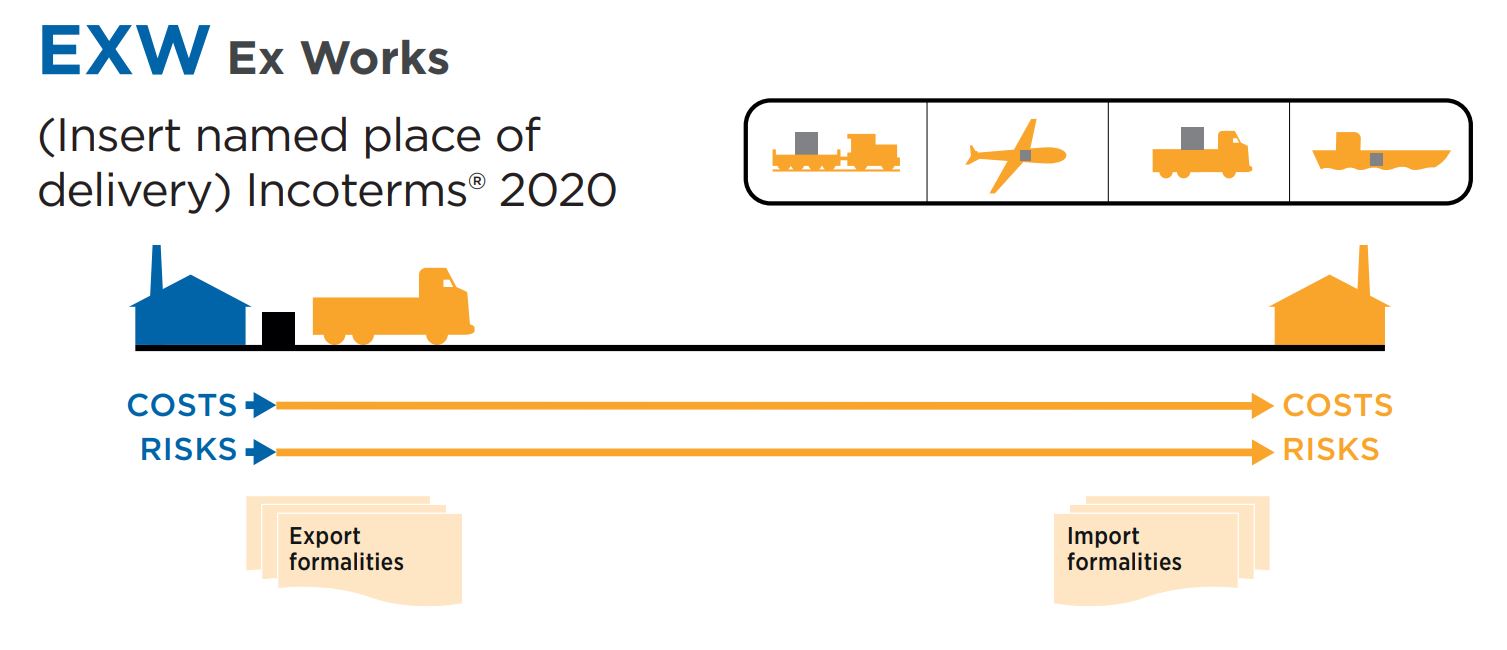
EX-Work, This means, the least responsibility, Cost and Risk for the Seller. This means, buyer should arrange the loading team and get its cargoes directly from seller’s warehouse or factory. And buyer himself must prepare the documents (which sometimes can be challenging).
In my experience, most of the sellers wants to do the export themselves. So, you can ask them to prepare the documents themselves and you as buyer may face less difficulties.
The EXW term is most likely for any type of cargoes. But some goods like dangerous cargoes or some radio devices may need to be exported by shipper (exporter, seller) himself due to governmental regulation.
Take a look at this picture:
What is FOB term in INCOTERMS 2020?
According to Ibero American INCOTERMS reports in 2023 from ICC, Free on Board known as FOB is the most common delivery terms with the ration of 47% within 48 combination among Ibero nations and companies. And these statics is showing the importance of FOB among companies.
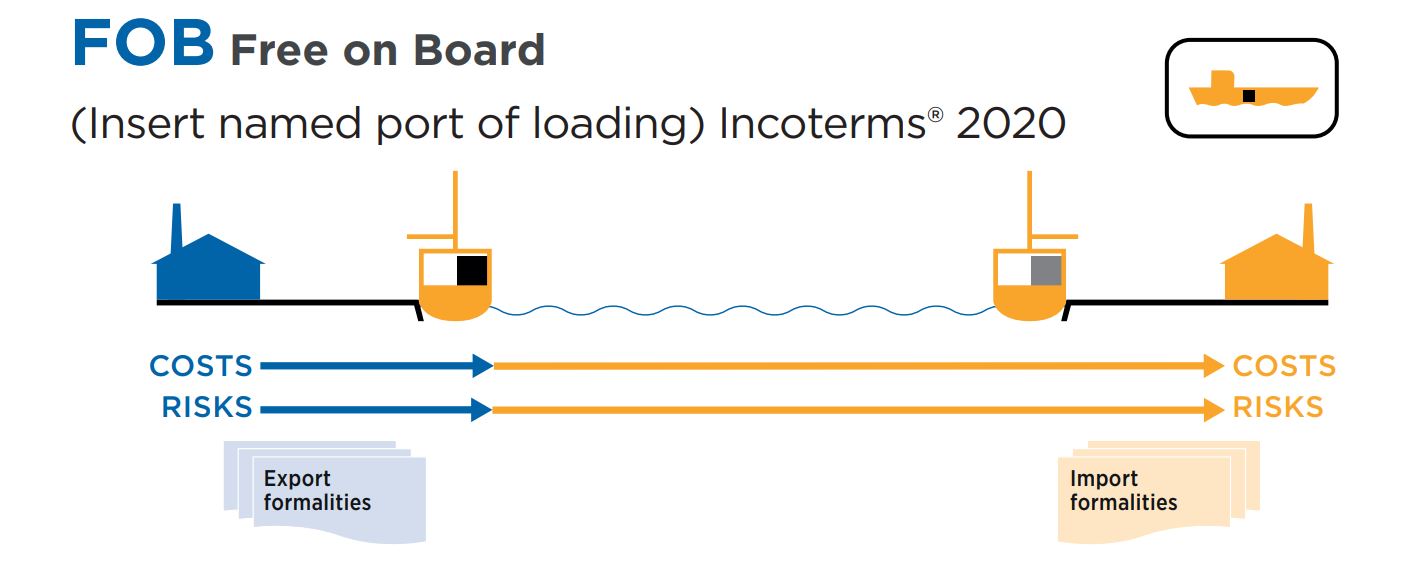
Important note: FOB is for Sea and inland waterway transportation and it will not use for other types of transportation.
This term, have some features that will helps buyers to know where the risks will transfer to them.
In short the crucial transfer points will be:
Seller’s duties:
- Responsibility finish after: Do export formalities and transport the cargo on the Ship in loading port
- Risk transfer: on the loading vessel
- Cost: Exportation docs to loading on the Ship in POL (port of loading)
Buyer’s duties:
- Responsibility start from: loading on Vessel in POL
- Risk: on the loading vessel
- Cost: Transportation and importation costs
Take a look at this picture:
In my experience from working with my clients since 2015 shows, FOB term is best for many cargoes and many contracts. And it’s widely used for even dangerous cargoes too. If you have good shipping expert that can prepare good transportation plans, you can reduce you costs.
What is CFR in INCOTERMS 2020?
CFR or Cost and Freight will be more complicated for both sides in business. They used to call this term as C&F. This one have many common things with FOB (because it is for Waterways and seas) but has some other things too.
And as it refers to Freight, it is more expensive than FOB and has many details hidden in it. As my Middle Eastern customers mentioned, they like this term very much. Therefore, if you like to cover your clients need about transportation complexities, offer your products based on CFR or Other “C” terms which I will explain in following paragraphs.
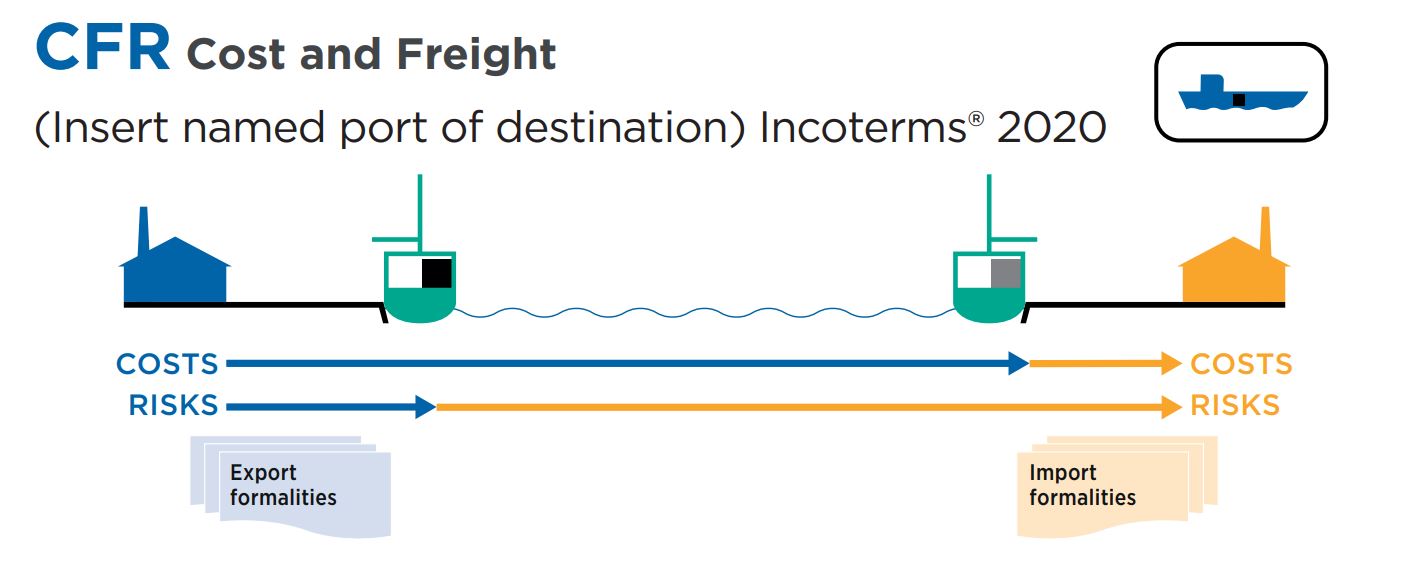
Don’t forget that CFR is like FOB for SEA and waterways. So, don’t use it for other types of transportation!!!
In short the crucial transfer points will be:
Seller’s duties in CFR term:
- Responsibility finish after: Do export formalities and delivery of cargo to POD
- Risk transfer: on the loading Transportation vessel (on the ship)
- Cost: Exportation up to delivering of the cargo to POD (port of Discharge) or agreed place
Buyer’s duties in CFR term:
- Responsibility start from: Insurance from Loading in POL and discharge after delivery of Cargo in POD
- Risk transfer: on the loading vessel
- Cost: Insurance and importing charges
Take a look at this picture:
What is CIF in Incoterms 2020?
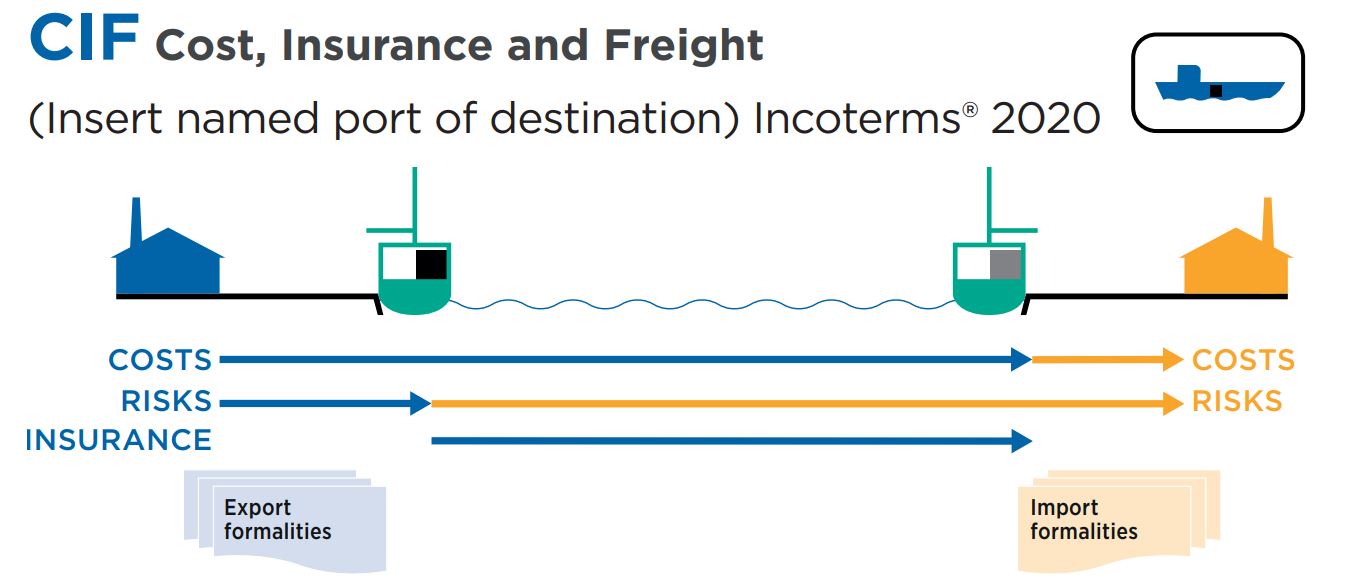
CIF is (Cost, Insurance, and Freight) and it is resemble to CFR in many aspect but in this term Exporter accepted to pay for Cargo insurance too.
My opinion, sometimes this term can hurt your business, and it may increase your import cost. One of my clients in 2020 decided to import some fresh fishes from Spain and he had chosen CIF for his shipment. As Corona hit the market, his cargo got stuck in Customs, and he face 15,000 USD for each RF container he imported.
He claimed from insurance company, but his request was denied due to complex and unsuitable insurance term that his shipper ordered. So, in my experience use the CIF where you have no choice, otherwise don’t use it. Or at least you chose the insurance company and terms.
Remember CIF is like CFR for Sea and inland waterways
In short the crucial transfer points will be:
Seller’s duties in CIF term:
- Responsibility finish after: Do export formalities and delivery of cargo to POD and Insurance of cargo
- Risk transfer: on the loading Transportation vessel (on the ship)
- Cost: Exportation up to delivering of the cargo to POD (port of Discharge) or agreed place and Insurance
Buyer’s duties in CIF term:
- Responsibility start from: discharge from vessel in POD
- Risk transfer: on the loading vessel in POL
- Cost: Importing charges
Take a look at this picture:
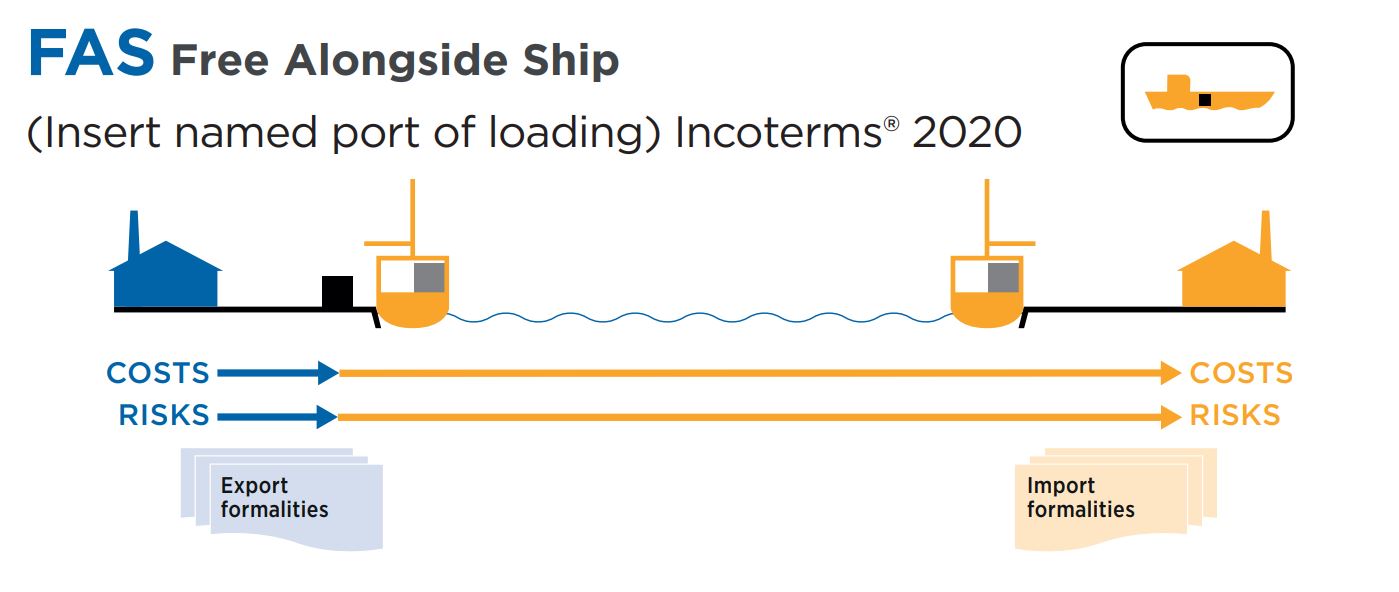
What is FAS in INCOTERMS 2020?
“Free alongside ship” is the full name of FAS. It is obvious that this is for Ships, not Trucks and other modules. In this term, Shipper will deliver the cargo next to the Ship in POL (not loaded). Then the loading, insurance, Freight and etc. will be up to Consignee’s duties.
I haven’t seen many people to use this term. But you can use it for cargoes that are very heavy or oversized or any special cargoes.
Obviously FAS is for Sea and inland waterways
In short the crucial transfer points will be:
Seller’s duties in FAS term:
- Responsibility finish after: Delivery of the Cargo next to Ship
- Risk transfer: near the Ship and vessel
- Cost: Exportation up to delivering of the cargo under the vessel’s hook
Buyer’s duties in FAS term:
- Responsibility start from: attaching the cranes of Ship on the ground in POL
- Risk transfer: Before pick up of the cargo in loading place near ship
- Cost: loading charges on ship and rest of the charges since then
Take a look at this picture:
All the above terms are for Sea and Waterways. For Truck/Air and Train I will explain other terms in below:
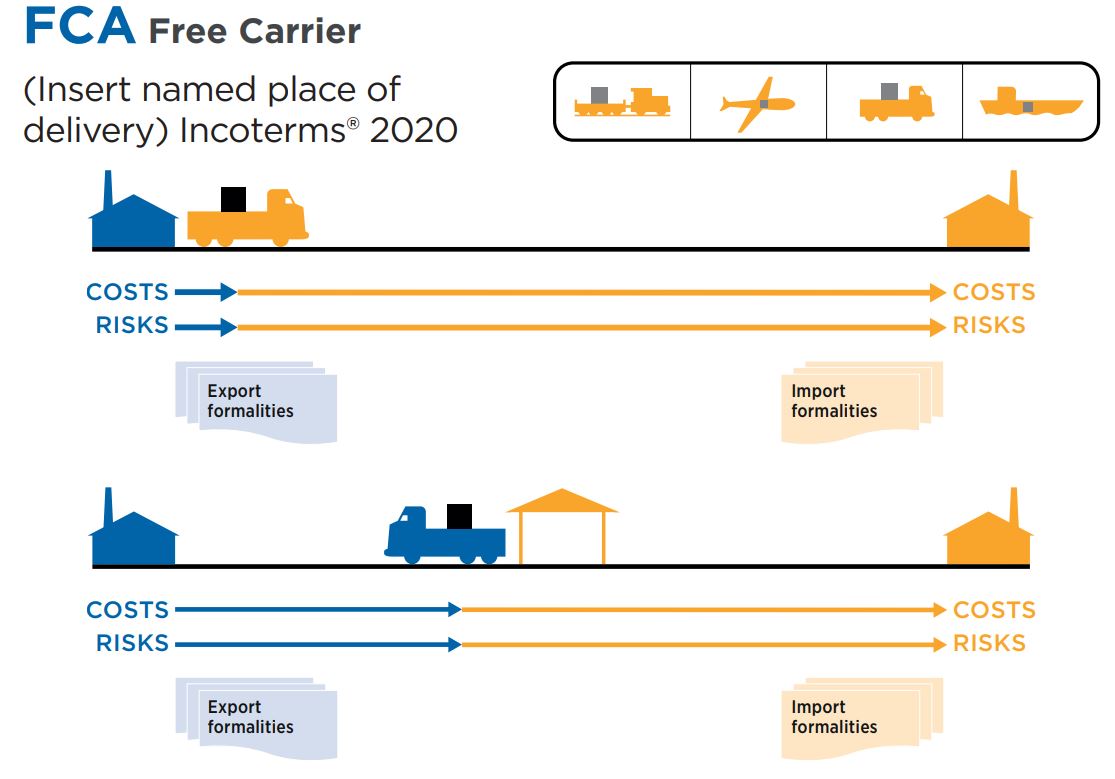
What is FCA term in INCOTERMS 2020?
The second most common place for incoterms usage will goes to FCA in International trades. According to my past trades and my clients dealing, this term is something like FOB but for road, rail and Air transportations.
This means seller/Exporter will do the Export formalities and load the cargo on Transportation vehicle which won’t be Ships or waterway vessels.
In short the crucial transfer points will be:
Seller’s duties in FCA term:
- Responsibility finish after: Do export formalities and transport the cargo on vessel (not Ships)
- Risk transfer: on the loading Transportation vessel
- Cost: Exportation up to loading on Vessel in POL (port of loading) or agreed place
Buyer’s duties in FCA term:
- Responsibility start from: Loading on transportation vessel
- Risk transfer: on the loading vessel
- Cost: Transportation and importation costs
Take a look at this picture:
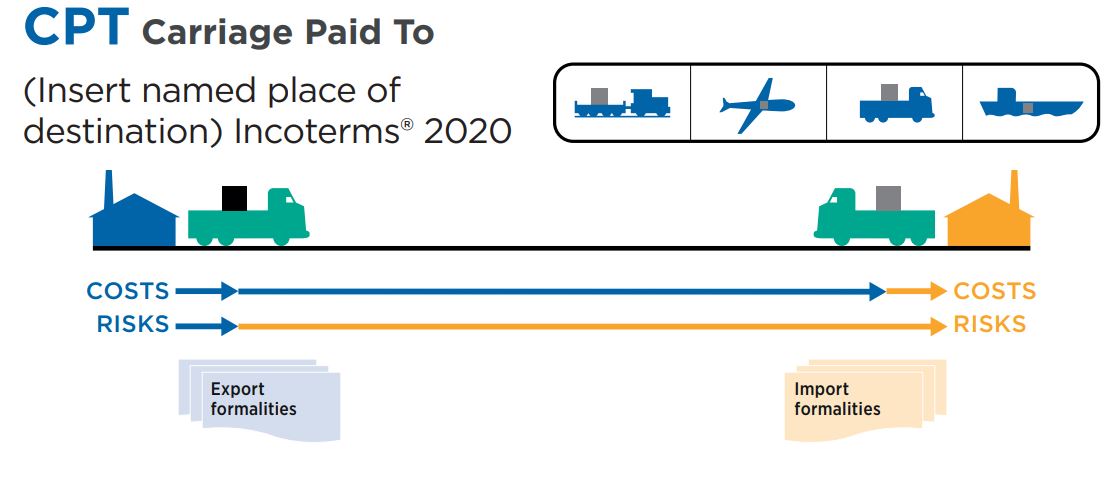
What is CPT in incoterms 2020?
This term is exactly like CFR but for vessels which is not Ships. “Carriage Paid To” will be the full name of CPT.
This term is commonly used across the world, and like me, there are many businessmen and women that are working with this condition.
In short the crucial transfer points will be:
Seller’s duties in CPT term:
- Responsibility finish after: Do export formalities and delivery of cargo to POD
- Risk transfer: on the loading Transportation vessel (NOT the ship)
- Cost: Exportation up to delivering of the cargo to POD (port of Discharge) or agreed place
Buyer’s duties in CPT term:
- Responsibility start from: Insurance from Loading place and discharge after delivery of Cargo in POD
- Risk transfer: on the loading vessel (NOT any Ships)
- Cost: Insurance and importing charges
Take a look at this picture:
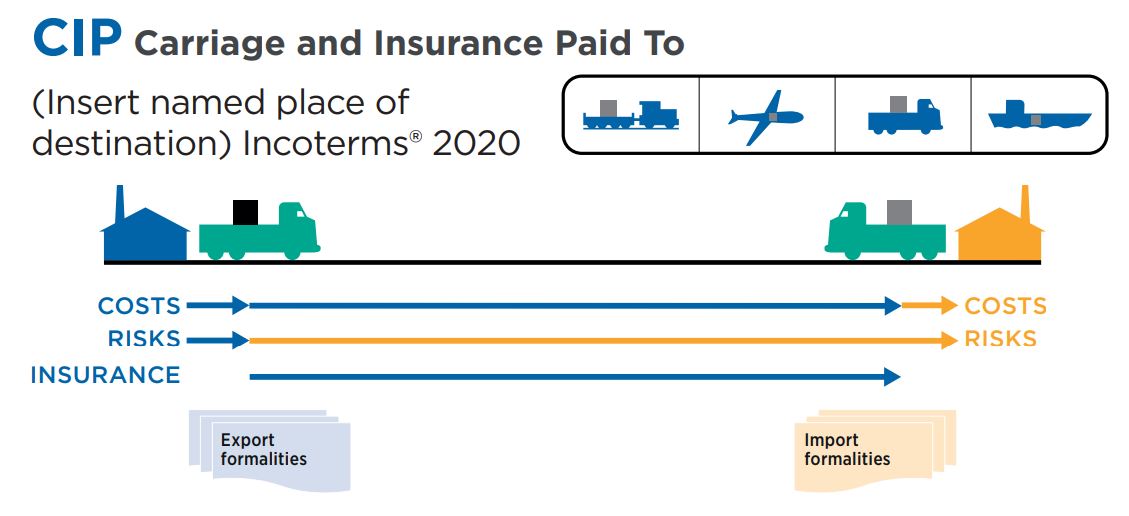
What is CIP in INCOTERS 2020?
This one is like CIF and it means “Carriage and Insurance Paid To” but for vessels that are not ships.
I have same recommendations like CIF, but using this term in completely up to your situation and your cargoes.
CIP is for Truck, Railways and Air transportation
In short the crucial transfer points will be:
Seller’s duties in CIP term:
- Responsibility finish after: Do export formalities and delivery of cargo to POD and Insurance of cargo
- Risk transfer: on the loading Truck, Train or Plain (Not on the ship)
- Cost: Exportation up to delivering of the cargo to POD (port of Discharge) or agreed place and Cargo Insurance
Buyer’s duties in CIP term:
- Responsibility start from: discharge from vessel in POD
- Risk transfer: on the loading vessel in POL
- Cost: Importing charges
Take a look at this picture:
There are 3 more terms which are DAP, DPU and DDP that will apply for all the modules of Sea, land and air.
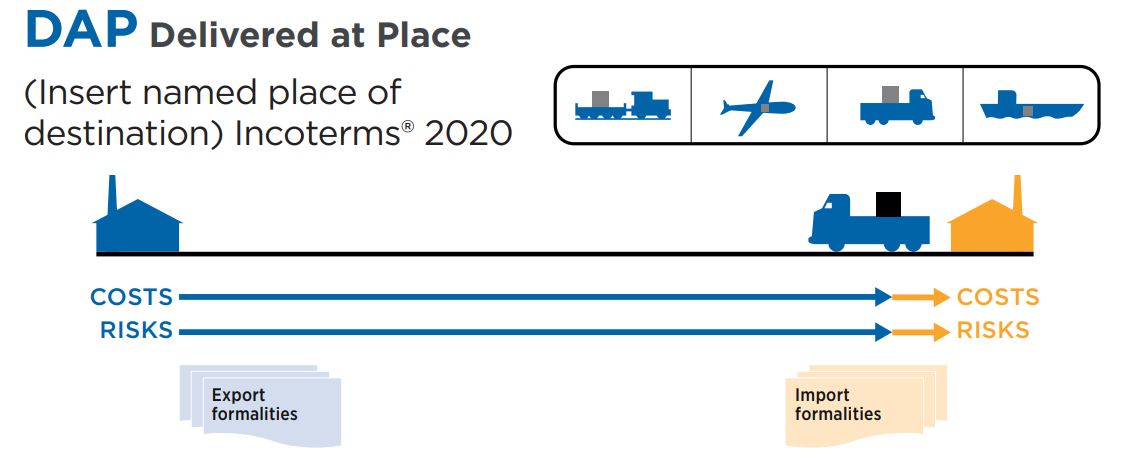
DAP in INCOTERMS 2020 means
I as shipper will deliver the cargo to your desired place and I will pay all the charges.
- Except one thing: Customs charges and related charges in delivering place.
- I will not unload the cargo and it is up to Buyer to unload it
- In words DAP means “Delivery at place”
Take a look at this picture:
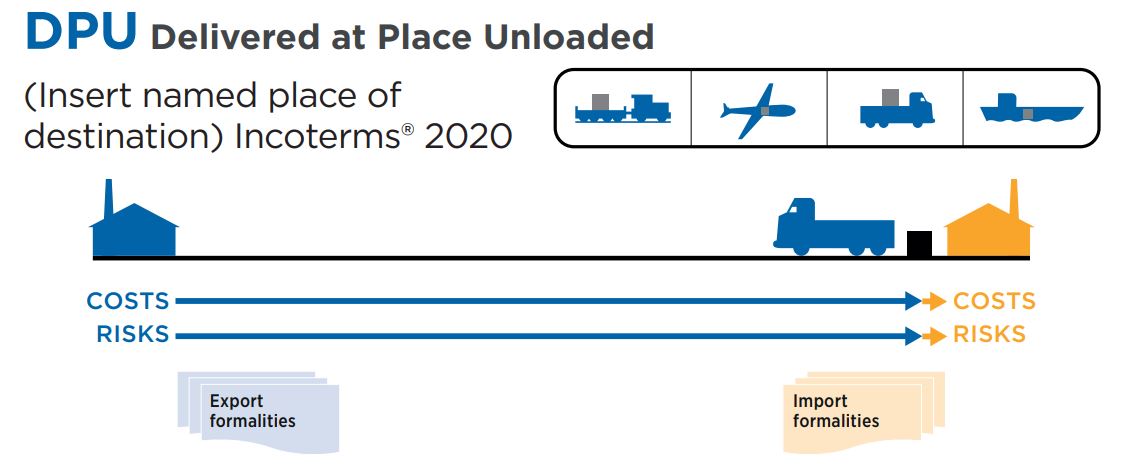
DPU in INCOTERMS 2020 means
I as Exporter will deliver the cargo to your desired place and I will pay all the charges.
- The customs charges will remain for Buyer
- I will unload the Cargo to your desired place
- In words DPU means “Delivered at Place Unloaded”
Take a look at this picture:
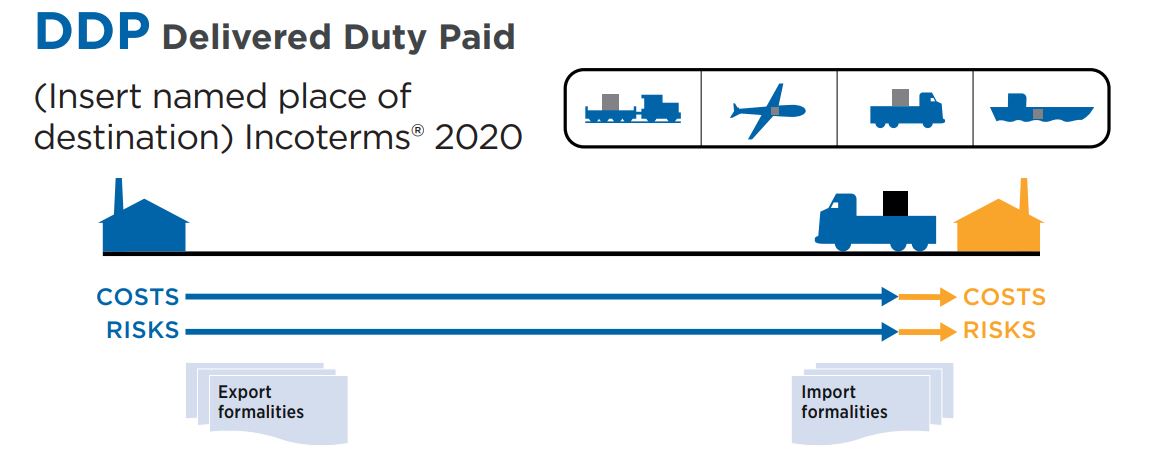
DDP in incoterms 2020 means
I am as Exporter will handle all the charges and I will deliver the cargo at your requested place and will pay even your customs and importing charges. But, Unloaded on the Vessel and loading is up to buyer responsibility. DDP means “Delivery duties paid”
Take a look at this picture:
After you read all the above terms now you must know other things about Incoterms too.
🔹 When to Use Each Term
|
Your Situation |
My recomendation |
|
New to exporting and want to keep it simple |
FOB or CIF |
|
Want to control shipping and avoid extra buyer demands |
EXW |
|
You’re offering full service to your buyer |
DAP |
|
Working with a freight-forwarder or 3rd-party logistics partner |
FOB or CFR |
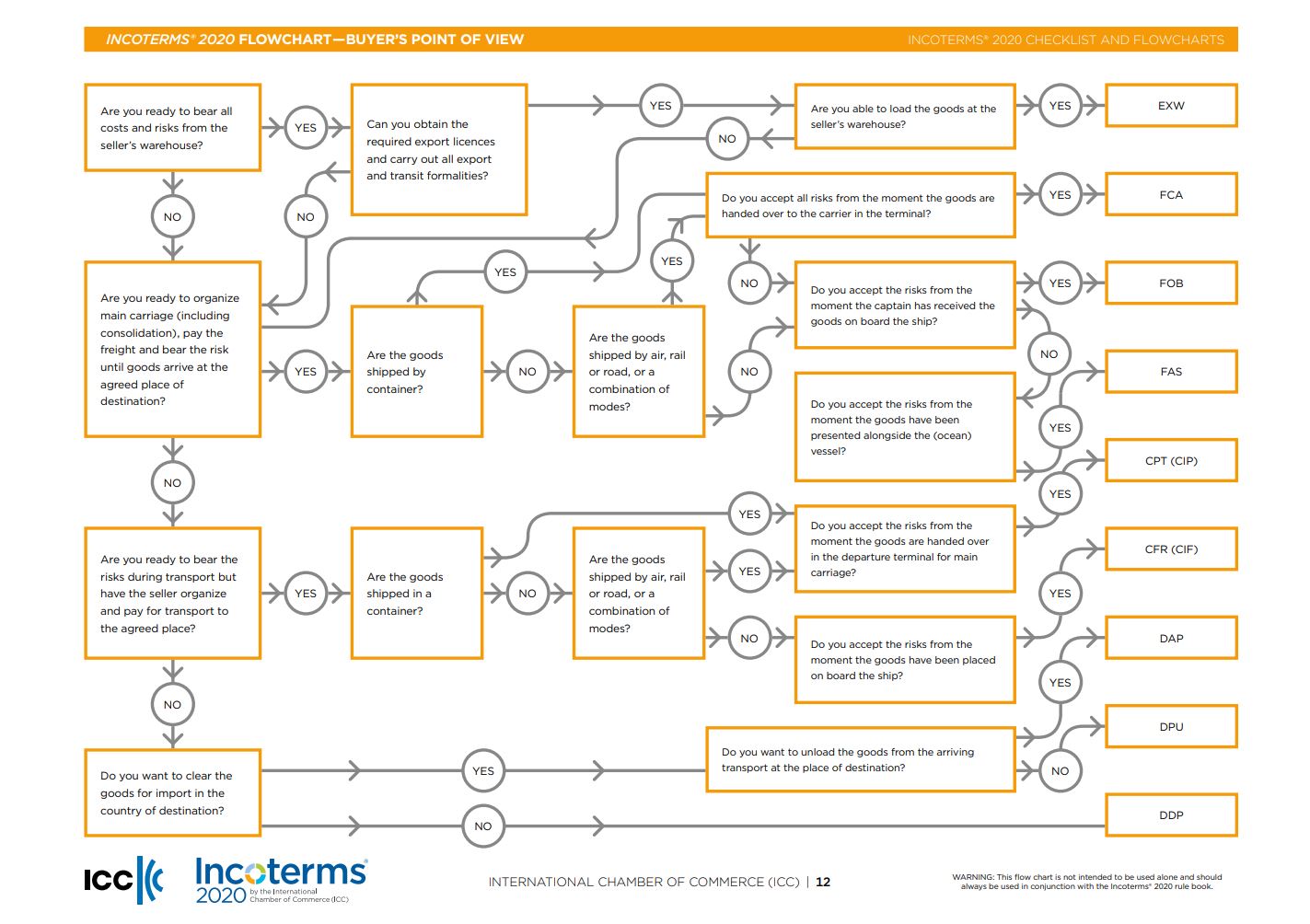
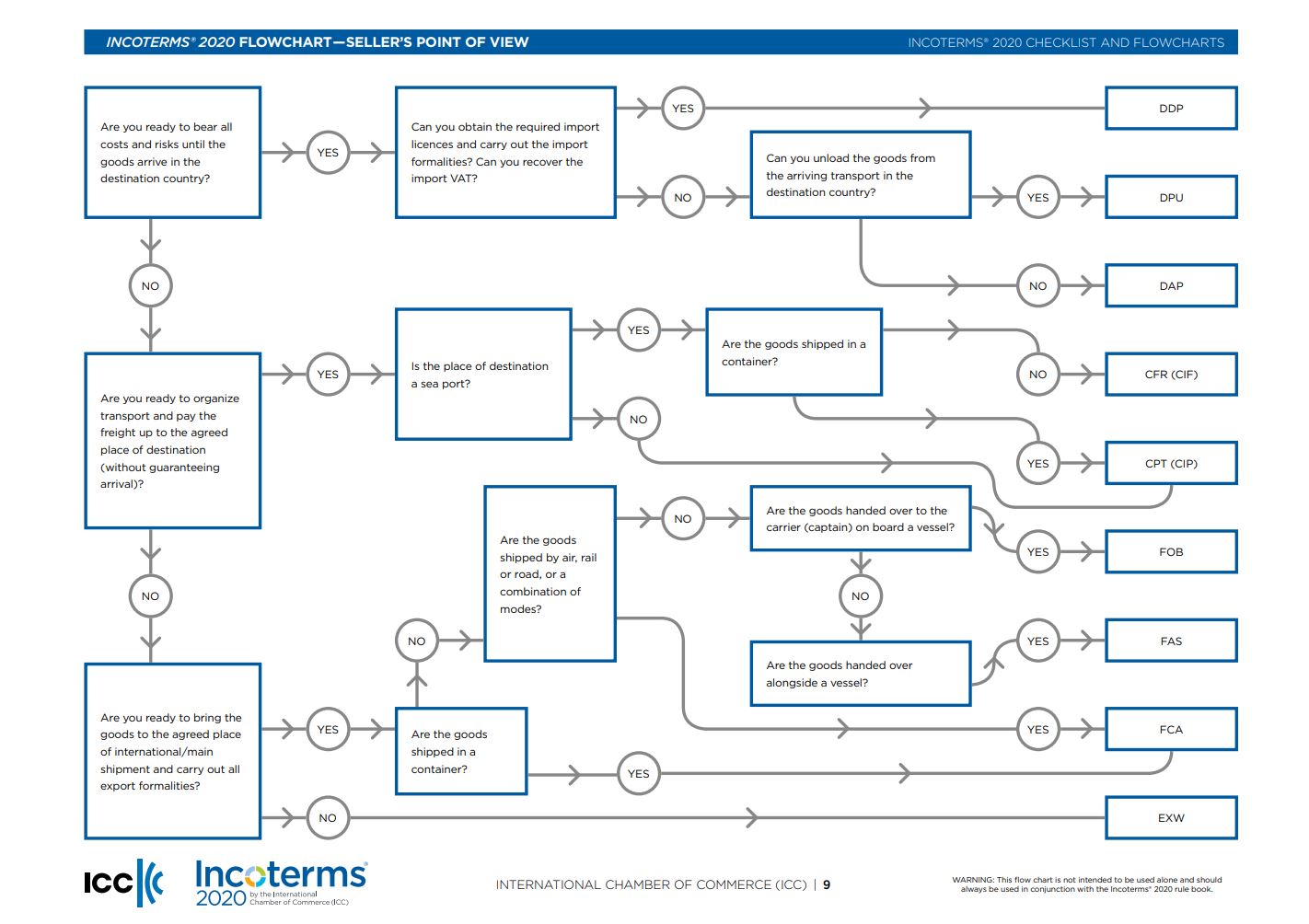
Chart for helping you to decide which Term in Best for you:
Buyer’s Point of View
Seller’s Point of view
🔹 How to Choose the Right Incoterm as a Supplier
In my experience, before agreeing to any Incoterm, Please consider:
1. Your shipping experience
If you’re new to exporting, use FOB or CIF where risk transfers at the port and you can work with a freight forwarder.
2. The buyer’s location
For nearby countries like Turkey or Iraq, road freight with FCA or DAP might be faster and more practical.
3. The type of product
- Use FOB or CFR for bulk shipments like nuts, grains, or fabrics.
- Use DAP or DDP only if you have reliable partners in the buyer’s country.
4. Your risk tolerance
If you want to minimize liability, EXW or FCA transfer risk early. If you’re confident in logistics and want to offer better service, CIF or DDP offer more control.
🔹 Common Mistakes Suppliers Make with Incoterms
- Assuming the buyer always covers shipping
- Using CIF and assuming risk stays with the seller until delivery
- Leaving Incoterms out of invoices or contracts
- Combining Incoterms with unclear payment terms (e.g., LC without shipment proof)
Reminder: CIF doesn’t mean “door delivery” — risk passes when loaded on the ship.
🔹 Incoterms Best Practices for Suppliers
- Always write the full term + named place/port Example: “FOB Bandar Abbas Port, Iran – Incoterms 2020”
- Match your documents (invoice, contract, and proforma) with the correct Incoterm
- Work with a logistics expert if you’re unsure which term fits your shipment
- Avoid DDP unless you're confident in import procedures in the buyer’s country
🔹 What Changed in Incoterms 2020?
- FCA: Now supports Bill of Lading with onboard notation (useful for LC payments)
- DAT changed to DPU (Delivered at Place Unloaded)
- Insurance: Clearer minimum coverage for CIF and CIP
- More transparency on security costs and logistics responsibilities
Source: ICC Incoterms 2020 Overview
✅ Conclusion: Know Before You Sign
Choosing the right Incoterm protects your shipment and your business. Before signing your export contract:
- Do I understand the costs I’m responsible for?
- Do I know when my responsibility ends?
- Is the Incoterm clearly listed on all documents?
✔️ If not, consult your logistics partner or our experienced team at AhuraCommerce before proceeding.
📌 Bonus Download:
Free PDF: Incoterms 2020 Cheat Sheet for Suppliers
Want a quick reference you can share with your team or print out for your office?
📄 Download the PDF Cheat Sheet (link to file)
How AhuraCommerce Helps Suppliers
We work closely with suppliers to make sure your products, paperwork, and logistics meet buyer expectations and legal standards. Whether you're exporting dried fruits, handmade rugs, or industrial parts, our team can help you pick the right Incoterms, manage customs, and connect you with reliable freight partners, so you can sell internationally with confidence.
Marketing and Commercial expert with more than 10 years of experience
💬 Contact us today to get advice or connect with a logistics expert.
References:
You can check all the gathered resources via Below links directly from International chamber of commerce
https://2go.iccwbo.org/downloadable/download/pdf/product_id/712/
https://2go.iccwbo.org/downloadable/download/pdf/product_id/1270/
https://iccwbo.org/business-solutions/incoterms-rules/incoterms-2020/


Ahura Commerce facilitates seamless international trade. Our platform empowers businesses of all sizes to navigate import/export regulations, connect with global partners, and optimize logistics. Leverage our expertise and network to achieve sustainable growth in today's interconnected marketplace.


