Most reads
- How and what are the Exportation from Iran to Oman 0 to 100?
- Top Canadian Exports Products in Global Demand in 2026
- Import screen from China
- Import from Iran
- Exporting Iranian Products to Kuwait
- What is Certificate of origin? (COO)
- Exporting Wheat from Canada
- Exporting dates from Iran
- Export Iranian products to Bahrain
- Import Pipes from China
- Export from Iran
- How to Export Iranian Iron Ore A Guide to Suppliers, Logistics, and Trade Compliance
- Canadian automotive exports Market and how to Export
- Pricing of Your Exporting Product in 2025
- 9 strategies find International buyers for my products
- Export walnut from Iran
- What supplier needs to know before exporting agricultural products in 2025?
- Why is exporting oil and fuel from Canada leading the global market?
- Incoterms 2020 and its importance for Exporters & Importers
- Lumber suppliers list 2025 best prices guide
Canada’s Automotive Export Market: Cars, Trucks, and Parts Breakdown
In this article "Canadian automotive exports and other related industries" our Team in AhuraCommerce has searched over Automotive market for Canadian car and trucks manufacturers. Basically, we have dived into statics and ratio over different years of automotive global market and Canada’s impact on it.
Canada's place in the global of manufacturing and exporting auto industry is no accident, but the result of a long-term strategy that has made it a crucial pillar of the national economy. By building one of the world's most integrated cross-border supply chains with the United States, Canada has become a sophisticated export hub especially for automotive and related car parts. The industry makes a substantial impact, contributing $16.8 billion to Canada’s GDP in 2024 and directly employing over 125,000 people, with nearly 700 parts suppliers forming its backbone.
Ontario serves as the nation's automotive heartland, home to assembly plants for major global manufacturers like Ford, General Motors, Honda, Stellantis, and Toyota. This deep partnership in export vehicles and parts, forged over a century, means parts like engines and transmissions cross the U.S.-Canada border multiple times, with Ontario accounting for 93% of the country's transmission imports destined for its factories.
The industry's story in recent decades is one of strategic adaptation, moving from mass production to high-value specialization, even as it faces significant headwinds. Vehicle production in Canada has shifted from a peak of 3.1 million units in 1999 to approximately 1.24 million in 2024, reflecting a global realignment of manufacturing. Despite producing fewer cars, the focus has intensified on building high-tech and high-value vehicles.
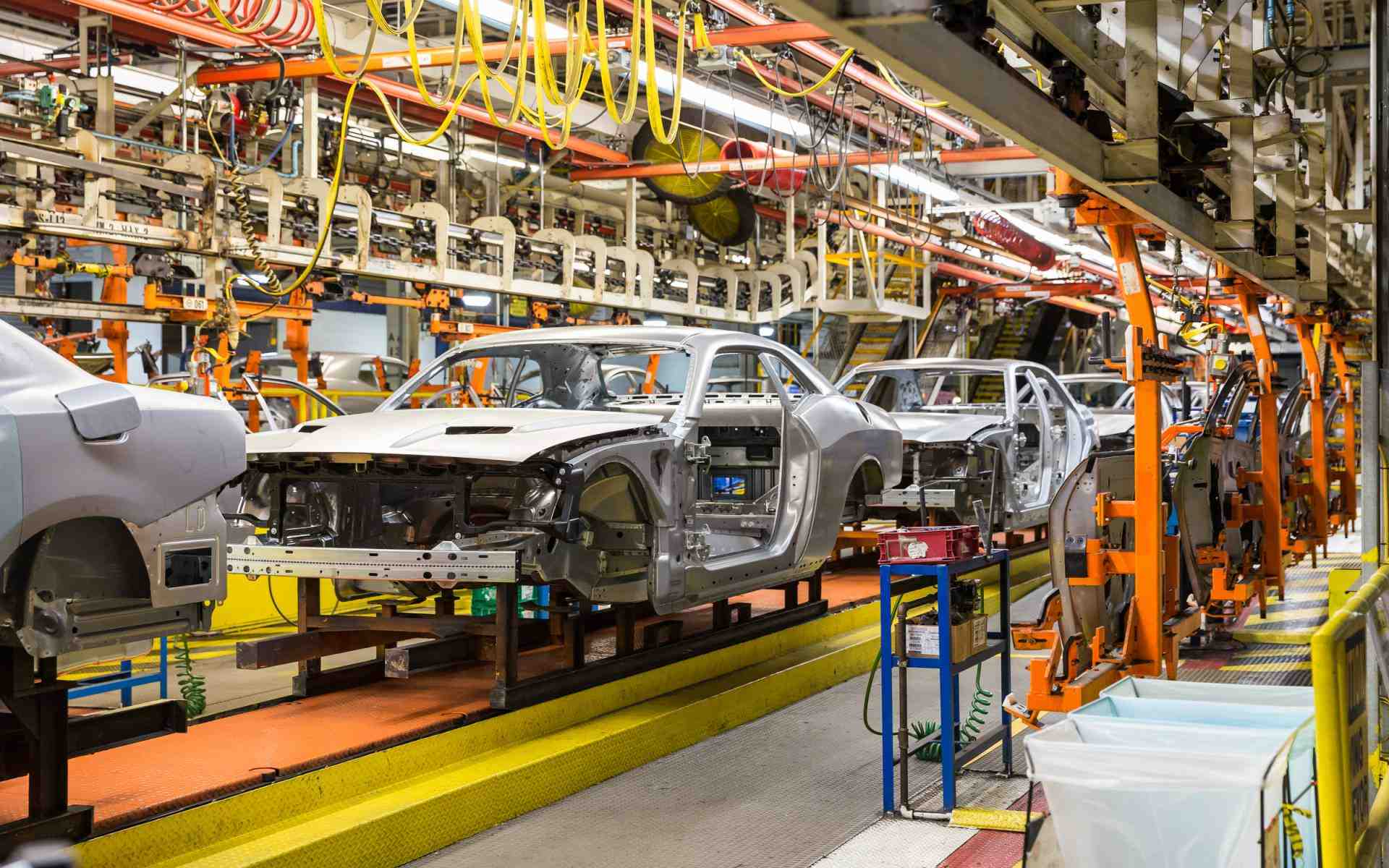
For instance, recent production starts include the all-electric Dodge Charger Daytona in Brampton and commercial BrightDrop electric vans in Ingersoll. However, the industry is navigating a challenging transition, caught in the crossfire of international trade disputes. Recent U.S. tariffs have led global automakers from Asia and Europe to increase their share of the Canadian market, while some manufacturers have paused investments in Canadian plants.
Looking forward, Canada is betting on its future in the electric vehicle (EV) revolution, leveraging its rich critical mineral resources and making investments to build a domestic battery supply chain and attract new EV manufacturing capacity.
What are the leading Canadian automotive exports in today’s global market?
As the reports and charts are illustrating the composition of vehicle export Canada has transformed. In 2010, the focus was heavily on passenger sedans. By 2025, the leading exports are defined by premium, high-margin segments:
- Premium Light-Duty Trucks & SUVs: According to charts and bars related to exporting cars and car parts from Canada in 2025, over 85% of the light vehicles produced in Canada are trucks or SUVs, up from roughly 65% in 2010. Models like the Ford Edge, Chrysler Pacifica, and Toyota RAV4 Hybrid are exported globally.
- Heavy-Duty Commercial Trucks: Canada is a North American epicenter. The sector produces approximately 250,000 heavy trucks annually, with export rates exceeding 60%. Brands like Volvo and Mack anchor this high-value trucks export Canada segment.
- Advanced Auto Parts & Systems: The foundational sector. Auto parts export Canada now consistently accounts for over $30 billion in annual exports, nearly matching the value of finished light vehicle exports.
Resource: here
How significant are car exports from Canada compared to other vehicle categories?
The term "car exports Canada" is now somewhat misleading. The data shows a profound categorical shift:
- 2010 Benchmark: Passenger car production comprised about 35% of total light vehicle output. Export value was broadly distributed.
- 2025 Reality: Car production has plummeted to under 15% of output. The financial significance is even lower. Comparatively, a single exported heavy-duty truck can be worth 5-10 times the value of a compact sedan. When assessing export vehicles Canada, the value concentration in premium utilities and commercial vehicles is undeniable. The parts sector further skews the comparison: for every dollar earned from exporting a finished vehicle, the industry earns nearly another dollar from exporting the components that go into vehicles worldwide.
Why is Canada a key player in the global vehicle export market?
Our team has tried to change the data and charts to useful information that you can use the practically. There are many factors that make Canada as a key car and truck and parts exporter and player. The numbers cement Canada's role:
- Consistent Top-Ten Ranking: For over two decades, Canada has remained one of the world's top 10 vehicle-producing and exporting nations and a top-5 vehicle exporter to the U.S. market.
- Productivity & Scale: Canadian assembly plants have consistently ranked among the most productive in North America. The industry supports over 500,000 direct and indirect jobs and contributes over $16 billion to annual GDP. (according to CVMA)
- Trade Value: Pre-pandemic (2019), total automotive trade (exports & imports) with the U.S. exceeded $140 billion CAD. This integrated, high-volume trade corridor is irreplaceable for both nations.
What role do trucks and commercial vehicles play in Canada’s automotive exports?
Trucks export Canada is a sector of superlatives:
- Heavy-Duty Dominance: Canada builds about 40% of North America's Class 8 heavy trucks. This is not a volume game; it's a high-margin specialty. Export values for this category can reach $15-20 billion annually.
- Historical Growth: Since 2010, heavy truck production in Canada has grown at a compound annual rate approximately 50% faster than light vehicle production, showcasing strategic diversification.
- Global Reach: While the U.S. takes the majority, Canadian-built heavy trucks are exported to over 45 countries, including Australia, Chile, and Saudi Arabia for resource and logistics sectors.
How does the auto parts export sector strengthen Canada’s automotive industry?
The auto parts export Canada sector is the industry's resilient circulatory system:
- Employment Anchor: It directly employs more than 110,000 people, compared to about 85,000 in vehicle assembly—a ratio that has held steady since 2010.
- Innovation Investment: Parts firms account for over 35% of private sector R&D spending in Canadian manufacturing. They export advanced drivetrain, battery, and connected vehicle technologies.
- Stabilizing Effect: During the 2008-09 crisis and the 2020-21 chip shortage, parts exports declined less severely than vehicle exports, providing crucial revenue stability for the broader Canada automotive industry.

Which countries are the top destinations for export vehicles from Canada?
The map for export vehicles Canada shows remarkable consistency with one glaring change:
- United States: The dominant share has held firm. In both 2010 and 2025, the U.S. receives 93-96% of Canada's finished vehicle exports. The value, however, has increased from ~$40 billion to over $55 billion annually, driven by higher-value models.
- The "Rest of World" Shift: In 2010, other destinations were negligible. By 2025, while still sub-5%, exports to non-U.S. markets have diversified. China has emerged as a key destination for premium SUVs (e.g., the Lincoln Nautilus), and South Korea imports Canadian-built engines. The European Union receives specialized commercial vehicles.
What challenges and opportunities are shaping Canada’s automotive export market?
Challenges of Exporting car and related parts from Canada (Quantified):
- The EV Investment Gap: Since 2020, the U.S. has attracted over $110 billion in announced EV and battery investments via the IRA. Canada's comparable figure, while significant at over $40 billion, highlights the intensity of the competition for capital.
- Productivity Cost: Total automotive manufacturing costs in Canada remain 5-10% higher on average than in the U.S. South, a gap that has narrowed only slightly since 2010.
Opportunities for Canadian car parts exporting(Quantified):
- Battery Supply Chain: Canada's strategy is showing results. From near zero in 2020, Canada is projected to have over 200 GWh of annual battery cell production capacity by 2030, serving both domestic assembly and export vehicles Canada.
- Green Manufacturing Premium: Canadian vehicles are increasingly built with ~80% clean electricity (hydro/nuclear) versus a ~40% U.S. average. This measurable carbon advantage is becoming a tangible export asset in regulated markets like the EU.
- Software Value-Add: Canada's AI talent pool, concentrated in Ontario and Quebec, positions the Canada automotive industry to capture a greater share of the software value in next-generation vehicles, which is projected to rise from 10% to over 30% of a vehicle's total value by 2030.
In General Exporting automotive and related industry from Canada
The data reveals a clear trajectory. Between 2010 and 2025, the Canadian automotive exports model successfully pivoted from relying on high-volume, midsize sedan production to specializing in high-margin, complex vehicles and sophisticated components.
The challenge for the next decade is to leverage quantified advantages—clean energy, battery minerals, and AI software—to transform from an integrated North American partner into an indispensable global hub for the electrified, software-defined vehicle. The foundation of scale, skill, and trade access is solid; the future hinges on capturing the quantifiable value of innovation.
To wrap it up AhuraCommerce is here with you, over the whole marketing and Commercial process even from food supplements to Car, trucks and other parts of the vehicles. So, our experts will be by your side to help you expand your market and export your products and goods.
Export Marketing & Commercial Expert with more than 10 years of Experience


Ahura Commerce facilitates seamless international trade. Our platform empowers businesses of all sizes to navigate import/export regulations, connect with global partners, and optimize logistics. Leverage our expertise and network to achieve sustainable growth in today's interconnected marketplace.


